
Letting your dog sire a litter might seem like an easy way to get involved in breeding but there’s far more to it than just putting two dogs together to produce puppies. It’s about contributing, in a responsible way, to the future of the breed and the decisions you make as a stud dog owner carry just as much weight as those made by the bitch owner.
Your dog siring a litter should never be about your own ego, convenience, or making money. It should only be considered if your dog genuinely has something valuable to offer the breed – and you are prepared to be part of the process in the long term.
In practical terms, it is for the stud dog owner to achieve the mating and that in itself is not always straightforward. Bitch owners have often travelled a long distance to use a particular dog so as stud dog owner, you need to be confident and capable of conducting the mating. Bitches can be awkward to downright difficult to serve and an inexperienced male can be easily put off by aggressive behaviour from a bitch. Matings do not always go according to plan and it’s important to recognise that things can go wrong. Any injury to dog or bitch may require veterinary assistance.
Before agreeing to a mating, both owners should consider the risk of infectious diseases, including Brucella Canis, which can be transmitted through breeding. Appropriate veterinary advice and testing should be sought, particularly where either dog has been imported or has a relevant breeding or travel history.
Is your dog suitable?
Your dog should be –
- Physically and mentally mature before it can be considered for stud work. A young dog may not yet have developed sufficiently for his overall quality, temperament and suitability for breeding to be properly assessed.
- Well-constructed, fit and healthy – ideally considered to be a good example of the breed, meeting the Breed Standard set out by the Royal Kennel Club.
- Of kind, stable temperament and confident without being dominant or nervy.
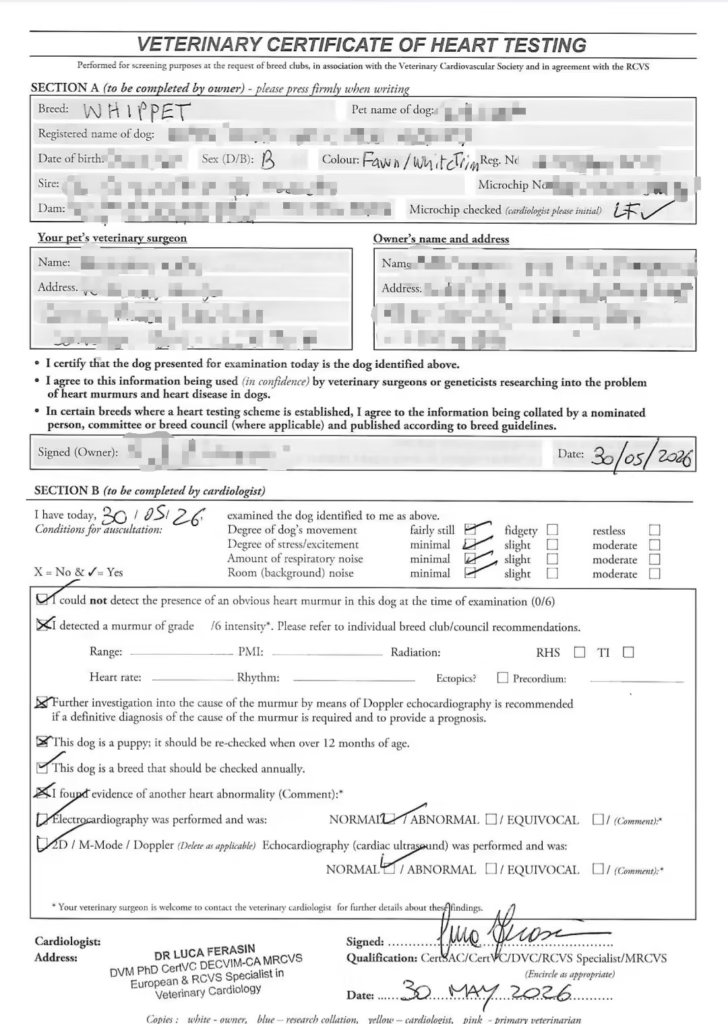
- Fully health tested – including heart testing by a cardiologist approved by the Veterinary Cardiovascular Society. Being able to run fast is not a sign of a healthy heart – there are plenty of dogs with serious heart disease who can still run well.
- From a line whose health history has been carefully researched, with no known hereditary conditions that would make the proposed mating inadvisable.
What are your responsibilities?
Some people assume the stud dog owner has very little to do once the mating itself has taken place. In reality, your responsibilities are only beginning. You need to –
- Be available to support the bitch owner – from pre-mating to giving follow-up advice long after the mating has taken place.
- Be honest about your dog’s pedigree, temperament, and health. Only allow your dog to be used on bitches who are also suitable – don’t agree to matings just because someone asks.
You should be prepared to say no to unsuitable bitches or inexperienced owners who aren’t ready for the responsibility. You should also be prepared to refuse a mating if you believe the combination of the two dogs is undesirable – even if both are individually good examples of the breed. A responsible stud dog owner should consider the proposed mating, the relationship between the pedigrees and the long-term interests of the breed before agreeing to proceed.
The aim should always be to produce healthy, sound Whippets with good temperaments, rather than simply producing puppies. Just because someone wants to use your dog doesn’t mean it’s the right thing for the breed – or for your dog’s legacy. - Keep track of what’s being produced – you should know how many litters he’s sired, how the puppies turned out, and whether there are any health or behavioural concerns which could be passed on to future generations.
- Consider the wider implications of repeatedly using the same dog at stud. Even an outstanding dog should not be used indiscriminately, as overuse of individual sires can reduce genetic diversity within the breed.
Should you have a written agreement with the bitch owner?
Always have a written stud dog agreement in place before the mating. Such an agreement protects both owners and helps avoid disputes. The agreement should clearly set out the stud fee, payment arrangements, what happens if the bitch fails to conceive, whether a repeat mating will be offered and any other conditions agreed between the owners.
The Royal Kennel Club provides a Guide to the Content of a Stud Dog Contract in the form of a template.
Do you understand the risks?
Once your dog has sired a litter, you are part of that breeding decision forever. If the puppies are poorly reared, end up in the wrong homes, or have health or temperament problems, as the sire’s owner, your name will be associated with those outcomes even though the primary responsibility for rearing and placing the puppies remains with the breeder.
Every time your dog is used at stud, you need to ask yourself if the mating is being done for the right reasons? Can the bitch owner offer proper rearing and provide appropriate vet care? Will he/she RKC register the puppies and home them responsibly? Will the bitch owner provide lifelong support to the homes? If the answer to any of those is no, then PLEASE DON’T DO IT.
We are seeing more and more young, unregistered or badly bred dogs ending up in rescue. Stud dog owners are part of that picture too. If you’re not prepared to step in if something goes wrong down the line, you shouldn’t be part of creating the litter in the first place.
Just as bitches don’t need a litter for the good of their health, dogs don’t need to be used at stud “just once” either. It’s a myth that it will settle them, mature them, or that they’re somehow missing out if they don’t. Your dog is no less complete if he never sires a litter.
Being a stud dog owner isn’t about boosting your dog’s popularity – it’s about making careful, thoughtful decisions that protect the future of the breed. And if you’re not prepared to stand by every puppy he produces – PLEASE DON’T DO IT.
What are the financial implications of using your dog at stud?
Using your dog at stud should never be seen as an easy way to make money. There can be considerable costs associated with health testing, veterinary care and responsible breeding more generally, as well as the potential for unexpected expenses. Stud fees are taxable income, and owners should be aware of their responsibilities to HMRC. Depending on your circumstances and the amount of income received, you may need to declare stud fees and keep appropriate financial records. The £1,000 annual trading allowance may be relevant, but it is not an automatic tax-free allowance. If you are unsure, seek advice from HMRC or a qualified accountant.
Still want to breed from your dog?
If, after reading this article, you would still like to become involved in breeding responsibly, a good starting place is to attend a Breed Club Championship Show or a recognised Racing or Lure Coursing event where you can ask advice of experienced breed people and reputable breeders before you take that first step.
A little bit of breed history
In recent times, the most successful stud in terms of siring UK Champions is Ch Citycroft High Society (b. 2014), bred by Jo Whitehead, Rachel Smith and Anita Mixides, owned by Mark Whitehead. “Gus” produced 10 UK Champions. Uniquely, the 10 came from different litters and different dams. Gus was heart tested clear throughout his career at stud. Only 2 dogs have sired more Champions – each just one more than Gus – Ch Laguna Ligonier (b. 1960) and Ch Pencloe Dutch Gold (b. 1989).
It should be noted however, that producing champions is not the only measure of a successful stud dog. Health, temperament, soundness and the quality of offspring as companions are equally important.