
One of the most common reasons Whippets arrive in rescue is when the relationship between a Whippet and a child or children of the family has broken down or even not worked at all. The information in this article is not intended to discourage families with children from having a Whippet, but to help families make homing a Whippet a success.
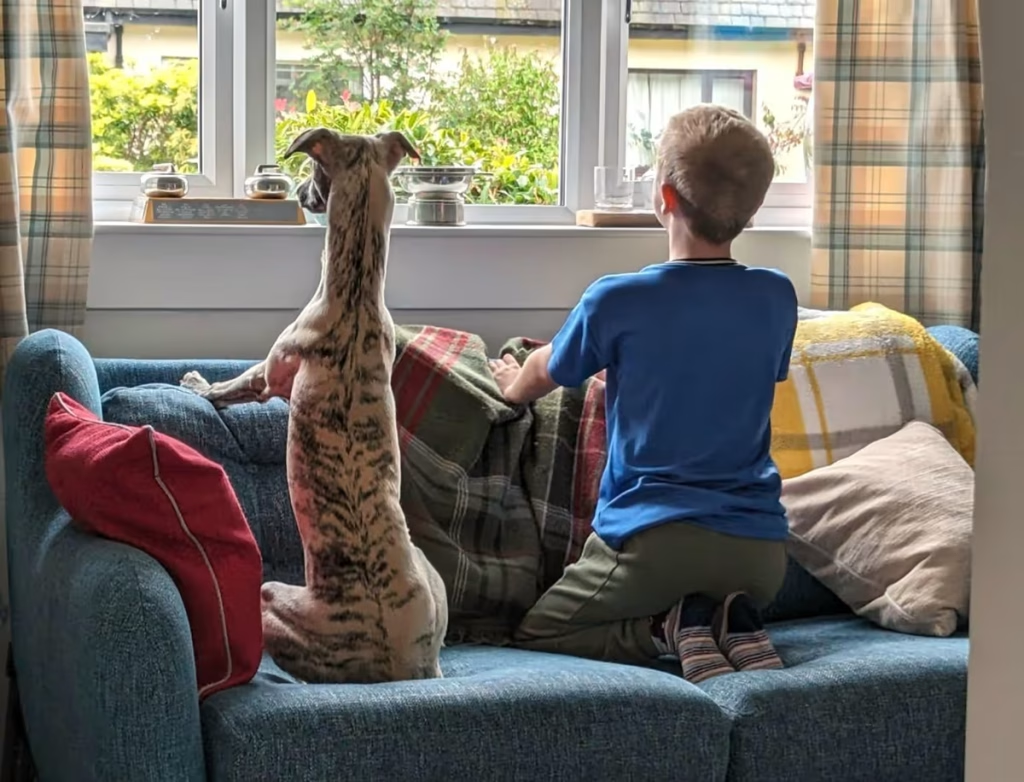
Firstly, a responsible breeder or rescue will be very careful about homing with children. Both may have a minimum age for the child or children in the home and their reasons for this need to be listened to and respected. A Whippet should become an equally important part of the family and this means offering a lifelong commitment to that dog. Your family circumstances may mean a need to be patient and wait until your children are a bit older or perhaps, wait for a rescue animal that has successfully lived with a child. Alternatively, the best decision may be to rehome an older, well-socialised dog from a breeder. You may find this article helps you to reach the right outcome for your family.
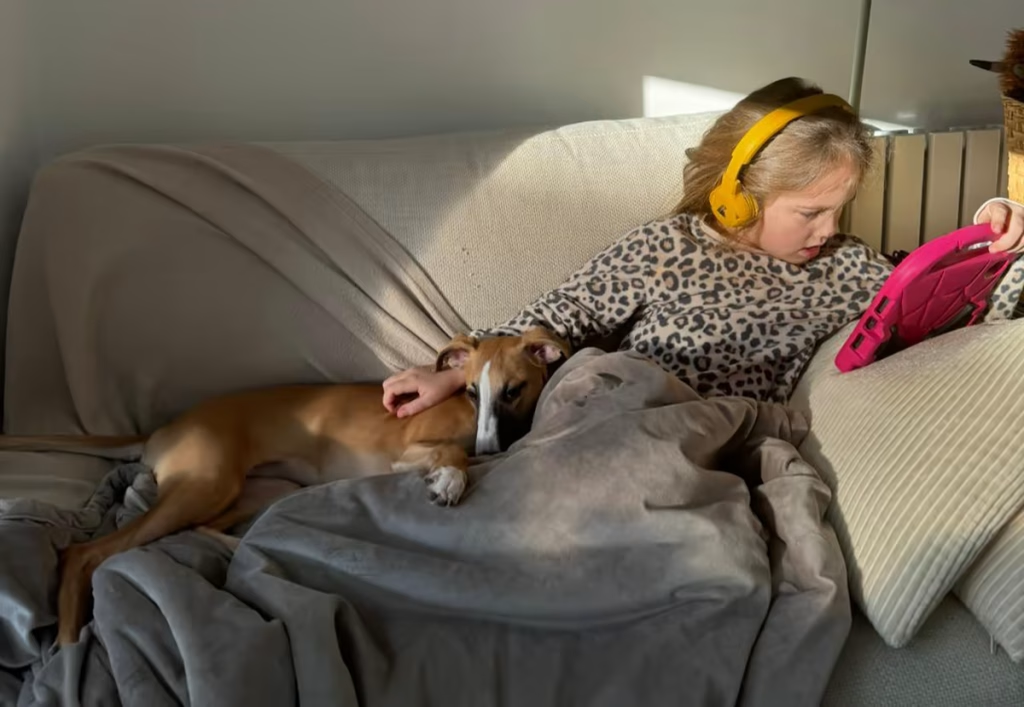
Whippets can make truly wonderful family pets. They are affectionate, love people, and often form very close bonds with children. Many will happily curl up beside a child on the sofa and become their quiet shadow around the house. However, and this part must never be glossed over, a Whippet is not automatically a “child proof” dog. Like any breed, the success of the relationship depends on those involved – adults and children – and the environment in which they will all live together. Whippet puppies and young adult Whippets require a great deal of training, attention, and understanding. They usually love children when brought up with them, but they can play hard, use their teeth, and may not start to properly calm down until they are around two years old, and in some cases a bit longer. This does not mean they tolerate rough handling, sudden grabbing, or being constantly surrounded by noise well. It is important to note that the Whippet is not:
- a sturdy, bomb proof breed;
- a dog that will shrug off being climbed on, especially when asleep;
- a dog that enjoys chaotic environments.
A Whippet under stress does not usually growl and warn loudly. Many will:
- freeze;
- avoid;
- hide;
- become anxious;
- or react suddenly when they feel they have no other option.
You must be ready to read signs of stress in your Whippet.
Babies and Toddlers – why a Whippet may not be suitable
Toddlers are unpredictable, grabby, loud, and unsteady on their feet. From a Whippet’s point of view, all of this can be frightening.
Key rules:
- The dog must always have a safe space such as a crate or bed where the child cannot follow;
- No child should ever approach a sleeping Whippet;
- No climbing, tight hugging, or lying on the dog;
- All interactions must be actively supervised by an adult, not simply watched from across the room.
Primary School Age Children
This is often a much better stage if the child is educated to interact with the dog in a good way.
Children should learn:
- How to stroke gently;
- To leave the dog alone when eating or sleeping;
- Not to chase;
- Not to scream near the dog’s face;
- To respect the dog’s bed as it’s personal space.
A Whippet that feels safe will usually choose to be near the child.
Energy Levels – the bit people do not expect
People imagine Whippets as calm sofa dogs – which they are after exercise. However, children can trigger zoomies, excitement, and over arousal. A Whippet can:
- Leap suddenly;
- Spin;
- Dash at speed across a room;
- Knock over a small child without meaning to.
This is play behaviour, not aggression, but it still needs careful management.
Where it often goes wrong
- The dog is not allowed its “quiet” time;
- The child is allowed to treat the dog like a toy;
- Warning signs of stress are missed.
Whippets thrive on routine and a peaceful environment. Constant disruption can be very difficult for them to cope with.
How to set everyone up to succeed
Give the dog a child-free safe space;
Regulate and maintain the dog’s normal exercise and attention regime;
Teach children how to behave with dogs, not just to be nice;
Supervise all interactions;
Never force the dog to put up with unwanted attention;
Watch for signs of stress such as lip licking, turning away, or leaving the room.
A Whippet should always be allowed to choose distance.
The honest bottom line
Whippets and children can be a wonderful combination. But a Whippet is a sensitive, feeling animal, not a furry toy, not a playmate on demand, and not a dog which should be expected to tolerate anything and everything.
In the right home, with kind, educated adults and respectful children, the bond can be beautiful. In the wrong set up, it can become overwhelming for the dog very quickly.
Choosing a Whippet when you have children is not just choosing a breed. It is committing to managing that relationship carefully every day.
Having owned whippets , including when my son was young, this is an excellent article which all potential whippet owners should read, it should be compulsory reading!